
Monday, 28 May 2012
Video clips of CCC 1m Climate Jobs Caravan London Rally
Video clips of CCC 1m Climate Jobs Caravan London Rally now posted at http://gptublog.blogspot.co.uk/2012/05/climate-jobs-caravan-final-rallies.html

Wednesday, 23 May 2012
Climate Jobs Caravan Final Rallies
May 12 2012 12:00 pm
May 24 2012 5:00 pm
Where:
All across the UK - See below!
Friday 25th May,
The Climate Jobs Caravan, currently touring the UK, is catching the imagination of people around the country.....offering a positive solution to the economic and climate crises we face.
For more details of the Climate Jobs Caravan tour: www.climatechangejobs.org/caravan or follow on twitter: @climate_caravan
For a report on the Climate Jobs Caravan up to now see here.
For more details of the Climate Jobs Caravan tour: www.climatechangejobs.org/caravan or follow on twitter: @climate_caravan
For a report on the Climate Jobs Caravan up to now see here.
Can't make it to these events ? - email or write to your MP and ask them to sign EDM 65 which supports the Caravan.
7pm Friends Meeting House, St. Martin's Lane, (off Trafalgar Square)
A chance to catch the excitement the Climate Jobs Caravan has been generating across the country as it has visited over 25 towns and cities with its message that investment in climate jobs can help solve both the economic and environmental crises.
A chance to catch the excitement the Climate Jobs Caravan has been generating across the country as it has visited over 25 towns and cities with its message that investment in climate jobs can help solve both the economic and environmental crises.
Speakers include:
Tony Kearns (Sen. Dep. Gen Sec of CWU),
Jean Lambert MEP, (Green Party),
Murad Qureshi (Chair, GLA Environmental Committee),
Professor Barbara Harris-White (Million Climate Jobs Report),
Suzanne Jeffery (Chair, Campaign against Climate Change Trade Union group),
Saci Lloyd (author),
Graham Thompson, (Greenpeace)
Graham Petersen (UCU),
George Barda (Occupy, London)
George Barda (Occupy, London)
And join us at lunchtime:
The nationwide tour comes to an end with a demand that Chris Grayling, the Minister for Work and Pensions, gets serious about job creation. Join us and the Caravan for a colourful lunchtime event.
One Million Jobs, Now Minister!
12.30pm, Dept of Work & Pensions, Tothill St, SW1H 9NA
MANCHESTER- Friday 25 May
Meet the Caravan and find out more about Climate Jobs:
10.30 - 3.30 - Piccadilly Gardens, Queen Victoria Statue
4.00 - 5.30 - Cavendish St, corner of Oxford Road
6.30 - 7.00 - Albert Square
Join the Caravan cycle tour around the town and the universities:
6.00 from Cavendish Street, corner of Oxford Road
10.30 - 3.30 - Piccadilly Gardens, Queen Victoria Statue
4.00 - 5.30 - Cavendish St, corner of Oxford Road
6.30 - 7.00 - Albert Square
Join the Caravan cycle tour around the town and the universities:
6.00 from Cavendish Street, corner of Oxford Road
Public Meeting at 7pm in Friends Meeting House, Mount St, speakers include Richard Lease, leader of Manchester Council & Martin Empson (CaCC TU group)
Further information from judy.paskell@gmail.com
Further information from judy.paskell@gmail.com
For a report on the Climate Jobs Caravan up to now see here.
Helping solve the climate & economic crises
On Saturday 12 May, the Climate Jobs Caravan tour of Britain started, with two caravans setting off simultaneously from London and Edinburgh. Organised by the Campaign against Climate Change Trade Union Group and based on the Million Climate Jobs report, produced with the assistance of the CWU, PCS, TSSA & UCU trade unions, the Caravan will highlight how creating climate jobs can help us tackle the twin crises of the economy and climate change. There is an inspiring 10 minutevideo that sets out what we can achieve.
The routes are summarised below and there is an action packed schedule of events.
Sign the One Million Climate Jobs petition here.
Route 112 May – Edinburgh
13 May – Newcastle 14 May – Derby 15 May – Leeds 16 May – Stoke-on-Trent 18 May – Sheffield 19 May – Liverpool 20 May – Huddersfield 21 May – Bolton 22 May – Wigan 23 May – Blackpool 24 May – Lancaster 25 May – Manchester |
Route 212 May – London
13 May – Coventry 14 May – Cardiff 15 May – Birmingham 16 May – Cambridge 17 May – Norwich 18 May – Oxford 21 May – Southampton 22 May – Portsmouth 23 May – Brighton 24 May – Redhill 25 May – London |
Friday, 11 May 2012

Wednesday, 9 May 2012
Red Green Interview 1 - Sean Thompson - The Green Party, Socialism & Green Left
From
http://www.theecosocialist.com/
Martin O'Beirne: Via people contacting this blog, and with conversations
through the social network profiles I have created over time, I have had an
interesting vantage regards the feelings people have toward the ecosocialist
movement. People identifying themselves under the umbrella term of
‘ecosocialists’ represent a very mixed bag. There are those with a well
considered sense of their political standing, describing themselves in manifold
ways: non-market socialists, Marxist-autonomists, anarcho-syndicalists, deep
ecologists! etc. Others have more mainstream social-democratic type
leanings, are environmental activists or
are those waking up to economic and environmental crises for the first time and
are yet to develop a sense of political identity.
ST The thing that often strikes me, particularly in the UK is how many
ecosocialists are politically unaffiliated but looking for an organisation to
be a part of. I can relate to this, it took me a long time to join a party;
generally disillusioned by politics and politicians whatever colour flag they
wave.
Eventually I decided to join the Greens, in the absence of a
significant number of people making like Zapatistas! and in the context of the
unfolding ecological and economic crisis, joining the greens seemed like the
best fit. There are elements of the party I struggle with; alas a complex
democratic structure will never be perfect for each individual, and party
politics is not the only battleground as I see it. I was particularly happy
that the party officially recognised occupy and of course there is the Green
Left, the omission of which would probably have had me looking elsewhere.
MB So my first question is this: If the greens are a social
democratic party occupying the political space left by labour’s turn to
neoliberalism and war, why should young people/any people think that the Greens
are worthy of their affiliation i.e. why would the greens not be contaminated
by the same forces that led Labour to occupy an indistinct position that
Galloway recently described as one arse with three cheeks (Labour,
Conservative, Lib Dems)?
ST As Green parties in Europe and elsewhere have grown,
developed a bureaucracy and full time leadership of professional (or would be
professional) politicians, their
‘natural’ trajectory seems to have been to gradually make more and more
accommodation to the political establishment until they have been largely absorbed
into it, like the German and Irish Greens. However, over the past four or five
years, the Green Party in Britain
has tended to move to the left.
This is, I think, the result of a number of factors. First,
the development of New Labour created a
huge vacuum on the left, into which the Green Party has been sucked - almost by
default. Second, despite the narrow reformism and environmentalist niche
politics that (traditionally) the bulk of Green Party members have felt
comfortable with, the objective reality of British involvement in seemingly
endless imperialist adventures, the greatest world financial crisis in history
and the ever growing threat of climate change, have combined to lead to
increasing numbers of Greens to develop a more generalised critique of
capitalism. Third, while this tendency to move to the left has been effectively
counteracted within other Green parties by the lure of elected office, in
Britain the electoral system serves to marginalise us - and thus to some degree
offsets the pressure to conform and accommodate. Fourth, the collapse of Labour
Party membership and the increasing irrelevance of the far left sects over the
last few years has resulted in a steady (if modest) stream of homeless
socialists of various hues and traditions into the party.
MB Based on specific policy examples can we describe GPEW as
an explicitly socialist party?
ST I don’t think so. It is de facto a social democratic
party - but I mean a proper social democratic party rather than the post social
democratic neoliberal parties like Labour in Britain
and the SDP in Germany .
By social democratic, I mean that it is implicitly (and to a modestly
increasing degree, explicitly) anti-capitalist, but that it has no real
analysis of the nature of capitalism and the state, and consequently no overall
strategy for how to get from where we are to where we want to be. As a result, the politics of the party tends
to be a jumble of crankish nostrums, modest reformism and a few elements of
various strands of socialist theory.
However, that is no reason for socialists not to be members
of the Green Party; I was for a good few years a member of the Labour Party,
which claimed to be socialist and until 1994 had an explicitly socialist
constitution, though it was clearly a pro-capitalist party. So I feel perfectly
comfortable being a member of a party way to the left of Labour, whose leader
has repeatedly proclaimed it to be anti-capitalist and whose policies, though
muddled and contradictory, are in many respects socialist.
The only reason that socialists should be active in this or
that political formation is because they believe that it has the potential to
play a part in building the mass movement of working people this is the only
agency capable of rebuilding society. I
think that can be said of the Green Party.
MB Some green party members have argued that the Green Left
is not relevant, after all the Green Party is ‘left’. How would you respond to
that?
ST The Green Party is certainly a party of the left and is -
fuzzily - anti-capitalist, but its politics are syncretic and impressionistic,
having largely developed out of a narrow and essentially middle class
environmentalism, mixed with elements of pacifism, feminism and (increasingly
explicit) radical egalitarianism. It is,
in some ways, the heir of the politics of the ‘fruit juice drinkers and sandal
wearers’ of the ILP that so irritated Orwell.
As a result, to a large degree the Party’s politics are built on
sentiment rather than rigorous analysis. This is compounded by the fact the the
Party has a very weak tradition of organised internal debate and political
education.
It seems to me, therefore, that the role of Green Left
within the Party should be, as Lenin put it, ‘to patiently explain’ the nature
of capitalism and the interrelationship between it and the looming
environmental and resource crises. Our role should be to make connections and
point out conclusions to be drawn. In particular, we should be endeavouring to
ensure the maximum amount of political discussion and debate at every level of
the Party at all times.
In his essay Towards a Revolutionary Party, Duncan Hallas, wrote:
‘Such a party cannot possibly be created except on a
thoroughly democratic basis; unless, in its internal life, vigorous controversy
is the rule and various tendencies and shades of opinion are represented, a
socialist party cannot rise above the level of a sect. Internal democracy is
not an optional extra. It is fundamental to the relationship between party
members and those amongst whom they work.’
I think that his view of the necessity for internal
democracy and organised political debate is as relevant for the Green Party
today as it was for the International Socialists 40 years ago - and Green
Left’s central role should be to act as vigorous advocates of both ever more
debate and ever more democracy in the Party.
MB You know Joel Kovel. What is it about his work that you
have found particularly inspirational and informative?
What most impresses me about Joel is his intellectual
courage and rigour. For example, his book Overcoming Zionism is a fearless and
damning analysis of Zionism and what he calls the ‘state sponsored racism’ of Israel . He knew
that to publish it would be to expose himself to organised abuse and would
endanger his academic career, but he still spoke out - and lost his
professorship as a result.
His book The Enemy of Nature remains one of the most
important expositions of ecosocialist theory yet written. In it, he brings his
original background as a psychiatrist and psychoanalyst to play in making a
creative contribution to a Marxist understanding of the concept of human nature
and the dialectical relationship between humanity, social production and
‘nature’. He writes:
‘There is an inescapable tension between humanity and
nature. From one side, a fully embodied creature, obeying all the laws of the
universe; from the other, a stubborn, proud and willful creature who
distinguishes the self from nature and even chooses to protest the natural. We
can say it is a facet of human nature to quarrel with nature and even to reject
the purely natural given…
Both social production and consumption are are direct
extensions of human nature, in that each transforms nature through an
engagement with the imagination and the ensemble of human powers. Production -
and the human capacity for labour - is, as Marx insisted, a matter of looking ahead:
every object that gets made exists in the imagination before it does so in
reality’
In a speech to Occupy Wall Street a few months ago, he said:
‘An association of free people will take care of nature
because they see themselves as part of nature. They will struggle for a new
world based on a new kind of production that gives nature intrinsic value. They
will develop the tools for overcoming and healing the cancer of accumulation
and the ecological crisis it generates. Such a society will be in harmony with
nature and not nature’s enemy. I would call it “ecosocialism,” and I hope you
will join in its building. ‘
Stirring stuff.
MB You have recently written a chapter for a book, soon to
be released. Can you tell us a bit about that book and your contribution?
ST The book is titled Capitalism, Crisis and Alternatives.
It is a collection of essays attempting to present a comparative analysis of
the world crisis in different regions and to contribute to the debate about
alternatives to neoliberal policies, with particular reference to the the
multiple dimensions of the crisis.
My contribution is a chapter entitled A Green Industrial
Revolution. Starting from the position advocated in the Million Green Jobs
pamphlet I argue that if we are to use the process of de-carbonising Britain to
create more aggregate demand and hundreds of thousands of socially useful jobs,
it will be necessary for us to rebuild our industrial base - to strategically
re-industrialise in fact. However, we need to explicitly develop clear aims and
objectives (that are completely different to those of the British ruling class)
and new democratic forms of common ownership, control and planning. I suggest
what some of those aims and objectives might be and use the electrical
generation and distribution, transport and construction sectors as exemplars,
as they would provide the base for all further re-industrialisation.
MB I think the
Green Left, the anti-capitalist – ecosocialist group within the GPEW has
enormous potential to grow and attract many of those unaffiliated ecosocialists
I mentioned in my intro. Do you think this to be the case and would you have
any suggestions for how it could move forward.
ST I agree, but perhaps not in the way that many comrades in
Green Left or on the left in the Green Party would first think of. I don’t
believe that we should aim to be primarily a recruiting sergeant for the Green
Party within the wider labour movement, nor that we should just focus our
efforts on drafting motions for conference which will notionally move Green
Party policies to the left - and we certainly shouldn’t see ourselves as the
beginning of yet another sect. I think that we should be building what Hal
Draper, author of The Twin Souls of Socialism, described as a political centre.
What Draper meant by a political centre was not a sect that
claims for itself exclusive rights on the Full and Correct Programme and which
calls on working people to climb up to its level, nor an internal faction that
is concerned almost exclusively with getting the correct line passed at
conference and getting the right people elected to party office. He saw it
primarily as a non or informal membership propaganda/educational centre as
distinct from a membership group enclosed in organisational walls. He gave the
loose grouping round Monthly Review at the time as an example - a contemporary
British example might be Compass.
I see the key tasks of such a centre (or tendency) as being:
to mutually develop a body of ideas and analysis and to publish a body of
political literature expressing and promoting them; to form cadres of party
workers and militants around this political core; to establish its ‘kind of
socialism’ as a presence in left politics, with its own physiognomy and name.
For us, that ‘kind of socialism’ is ecosocialism, and the task of Green Left is to develop and
explain ecosocialist ideas, not only to members of the Green Party, but to all
activists we work with in the wider movement. In my view, that means that first
priority of Green Left should be building its capacity to be a forum for the
development of ecosocialist ideas and as a broadcaster of those ideas in a
range of media, starting with the regular publication of the Watermelon.
Second, Green Left must be much more outward looking and seek to provide a
forum for all those interested in ecosocialist ideas. Our membership
requirements are pretty loose at the moment; all that is required is membership
of the Green Party and a small subscription to cover running costs. I believe
that we should open up Green Left to all socialists regardless of what party
they are or are not members of. We should aim to be, if you like, a red/green
equivalent of Compass.
Saturday, 5 May 2012
EVENTS IN MAY: Defend the NHS, Pensions Strike, Remember the Nakba, Climate Jobs Caravan
Red Pepper invites you to:
Defend the NHS! Strategies of resistance
Wednesday 9 th May 2012 7-9.15pm
Somers Town
London
Red Pepper brings together NHS experts, health professionals and
activists
to discuss the impacts of the bill and plans to resist it:
• Professor Colin Leys outlining the bones of the Bill and its
implications for people
• Jonathon Tomlinson (GP) on current plans for resistance from
GPs / health professionals
• Wendy Savage (Keep our NHS Public) on current plans for
resistance from Keep Our NHS Public
• Dr. Jacky Davis
The Coalition government has forced through the Health and
Social Care Bill which seeks to further open up the healthcare market via
welcoming ‘any willing provider’. This decision opens the door to the creation
of an unequal two tier system based on ability to pay. The leading private
companies stand to gain lucrative new contracts, subsidised by the tax payer,
to squeeze private profit through damaging ‘cost efficiencies’ while poor
people across the UK
Red Pepper is bringing together NHS expert and health
professionals with campaigners and activists to hear about the plans already
underway from those in the health sector to defend the NHS. We will discuss how
activists and campaigners can support these efforts and block the implementation
of the Bill and defend the principle of a comprehensive, universal free service
for all, that values people over private profit.
Places are limited, please RSVP to melissa@redpepper.org.uk
Pensions Dispute:
10 May strike
Next Thursday will see Unite, PCS and UCU take
action to defend pensions up and down the country.
Get down to the picket lines to show support.
There will be a march and rally inLondon :
March:St Thomas
Rally: Methodist Central Hall, SW1 from 1pm
Get down to the picket lines to show support.
There will be a march and rally in
March:
Rally: Methodist Central Hall, SW1 from 1pm
Saturday
12 May
REMEMBER THE NAKBA
END ISRAEL
SUPPORT PALESTINIAN PRISONERS
Saturday 12th May 1–3pm opposite Downing St London
Help us to build a new
mass anti-Apartheid movement
forPalestine
for
Join us: www.palestinecampaign.org •
www.bminitiative.net •
www.foa.org.uk
•www.palestinianforum.co.uk •
www.stopwar.org.uk
Organised by: Palestine Britain ,
Stop the War Coalition.
Supported
by: Architects and Planners for Justice in Palestine (APJP), CAABU, CND, CWU,
FBU, Green Party, GUPS UK, Haldane Society of Socialist Lawyers, ICAHD UK,
Lawyers for Palestinian Human Rights, Liberal Democrat Friends of Palestine,
London BDS, PCS, Viva Palestina, War on Want, Zaytoun.
climate caravan meeting
LONDON
Public Meeting, 7pm
Friends Meeting House, St. Martin 's Lane, off Trafalgar Square
Further climate caravan
meetings throughout UK
detailed at http://www.climate-change-jobs.org/node/20
Friday, 4 May 2012
"Capitalism: Crisis and Alternatives": Book Launch and Video clips
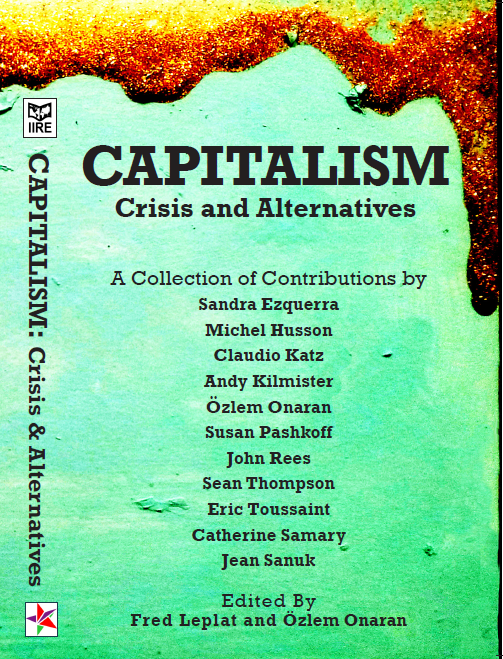 Hear some of the authors of the new title from Resistance Books:
Özlem Onaran, Sean Thompson and Susan Pashkoff
Four years on from the start of the crisis, there is no recovery in sight. The Cameron-Clegg government may claim that Britain is on the mend, but for the 99% of us the prospect for years to come is falling real incomes and insecurity. Meanwhile the eurozone crisis rumbles on, with no strategy except deep austerity for countries like Italy and Spain, let alone Greece and Portugal.
This new book analyses the crisis in different regions and is a contribution to the debates about alternatives. In addition to a general analysis of the crisis including how it affects women, contributions cover Britain, the European Union, there are also contributions on the eco-socialist alternatives to capitalism.
CAPITALISM – CRISIS AND ALTERNATIVES?280 pages, £9 (inc p&p)
Available from Resistance Books, PO Box 62732, London, SW2 9GQ
Contents:
WHERE IS THE CRISIS GOING? Michel Husson
THE CRISIS IN BRITAIN, Andy Kilmister
AUSTERITY AND THE LIES THAT IMPOVERISH, Susan Pashkoff
A GREEN INDUSTRIAL REVOLUTION, Sean Thompson
MARXISM AND THE CRISIS, John Rees
A FISCAL CRISIS OR A CRISIS OF DISTRIBUTION? Özlem Onaran
THE DEBT IN THE NORTH: SOME ALTERNATIVE PATHS, Eric Toussaint
WOMEN’S CRISES, Sandra Ezquerra
EASTERN EUROPE FACED WITH THE CRISIS OF THE SYSTEM, Catherine Samary
CHINA’S RISE AMIDST THE CRISIS, Jean Sanuk
LATIN AMERICA’S CRISIS, Claudio Katz
Introduction Ozlem Onaran Sean Thompson Susan Pashkoff Questions and discussion: part1 Questions and discussion: part2
Wednesday, 2 May 2012


Subscribe to:
Posts (Atom)